StoneLark Insect Control executes targeted stinging insect extraction designed around domestic relief and structural integrity. Nests established under Victorian-era soffits in German Village or behind the cedar lap…
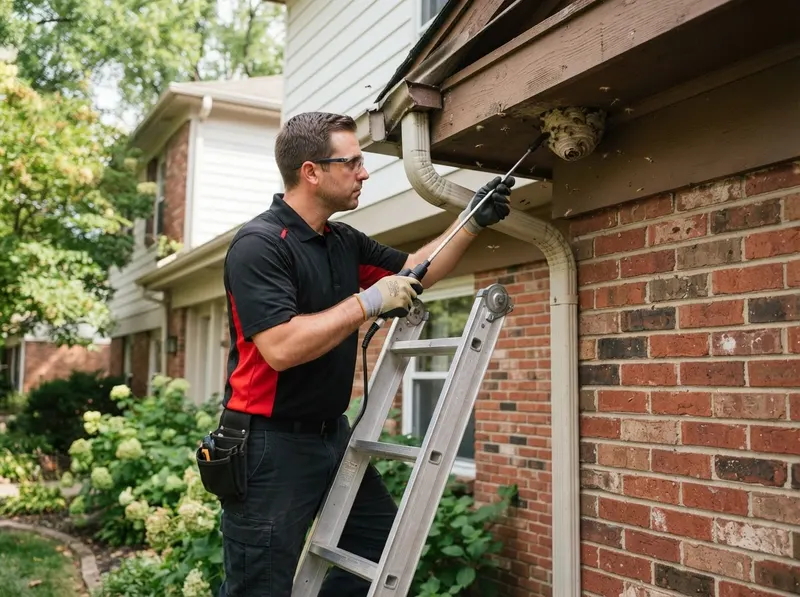
StoneLark Insect Control executes targeted stinging insect extraction designed around domestic relief and structural integrity. Nests established under Victorian-era soffits in German Village or behind the cedar lap siding common in Clintonville require radically different tactical approaches than exposed branch nests near the Olentangy River corridor. Exposed aerial colonies built by the Ohio State University Extension cataloged aerial hornets surrender quickly to directional aerosol freeze compounds, followed by clean physical scraping into sealed collection vessels. Conversely, concealed void nests, frequently encountered inside double-brick construction across Olde Towne East and Victorian Village, necessitate localized acoustic localization and microscopic void-dusting using botanical dusts compliant with standards published by the United States Environmental Protection Agency. This contained method eliminates the stinging swarm without saturating internal living spaces with uncontained wet insecticides.
Homeowners weighing store-bought consumer pyrethroid sprays against dedicated professional extraction face a significant tactical trade-off. Over-the-counter can sprays drop surface sentry insects but trigger defensive swarm responses from deep brood chambers, often pushing yellow jackets through interior drywall vents or recessed lighting canisters in neighborhoods like Upper Arlington and Bexley. StoneLark Insect Control avoids this hazard by applying focused formulations certified by the National Pesticide Information Center directly into brood nuclei, neutralizing workers, developing pupae, and the reproductive queen simultaneously. Technicians follow strict safety guidelines established by the Occupational Safety and Health Administration to access third-story dormers and tight roof rakes safely without causing architectural shingle degradation.
Our service protocol prioritizes pollinator preservation while maintaining zero-tolerance defensive boundaries for aggressive social wasps. When encountering honey bee aggregations near the Franklin Park Conservatory and Botanical Gardens or residential apiaries near Grandview Heights, technicians coordinate non-lethal extractions following guidelines documented by the Ohio Department of Agriculture Division of Plant Industry. When dealing with predatory bald-faced hornets near public recreation areas like the Scioto Mile Promenade or Goodale Park, complete physical removal of the cellulose paper envelope is mandatory; leaving nest carcasses intact invites secondary scavenging by carpet beetles, ants, and dermestid pests into attic insulation layers.
Every job gets a firm, written price after a free on-site visit.
Tell us about your stinging insect removal job in Columbus and we'll send a clear, written quote, usually the same day.
 StoneLark Insect Control