Flea and tick defense addresses the distinct biological life cycles of domestic blood-feeding parasites that bypass over-the-counter topical spot-ons and yard foggers. In Central Ohio, warming spring temperatures…
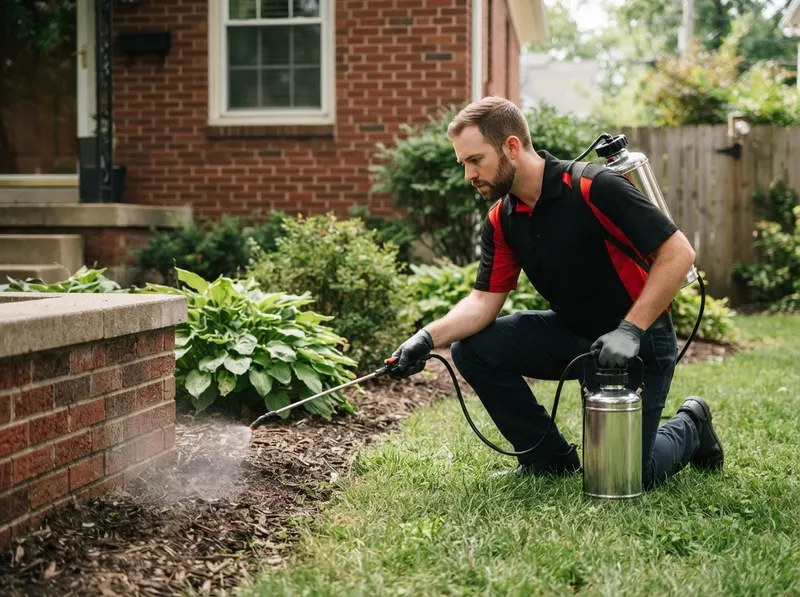
Flea and tick defense addresses the distinct biological life cycles of domestic blood-feeding parasites that bypass over-the-counter topical spot-ons and yard foggers. In Central Ohio, warming spring temperatures activate blacklegged ticks along moist woodland borders, while sustained summer humidity drives flea pupae emergence inside residential carpeting and upholstery. Effective intervention relies on adulticides combined with juvenile hormone mimics that break reproductive cycles by sterilizing surviving eggs. Outdoor treatments concentrate heavily along transition zones, shrub lines, leaf litter beneath mature oak canopies, and shaded foundation perimeters, rather than wasting material on direct sunlit lawn centers where tick desiccation naturally occurs. Indoor protocols focus squarely on baseboard cracks, subfloor margins, and under-furniture harborages where larval stages feed on organic debris. Families preparing homes need only vacuum thoroughly and clear floor spaces before application, allowing treated surfaces to dry completely over 2 to 3 hours before re-entry of dogs, cats, and small children.
Property infrastructure throughout Franklin County dictates specific technical adjustments during treatment. Older timber structures and brick brownstones in German Village, Victorian Village, and Olde Towne East feature wide-plank subfloors and damp crawlspaces that shelter flea larvae through dry winter months, requiring micro-encapsulated formulations that adhere to unfinished wood. In suburban properties across Upper Arlington, Bexley, and Worthington, mature deciduous canopy cover creates deep leaf detritus ideal for tick survival; these zones require high-pressure ground-directed sprays to reach the soil layer. Properties situated along river corridors near the Scioto Mile Promenade or ravine cuts in Clintonville and Grandview Heights experience persistent mammalian wildlife traffic, including white-tailed deer, raccoons, and feral felines, that continuously reintroduce parasites to turf perimeters. StoneLark Insect Control applies low-impact synthetic pyrethroids paired with pyriproxyfen along perimeter brush, establishing a persistent barrier that stops encroaching pests before attachment occurs.
Selecting a targeted perimeter application over simple retail yard granules resolves the recurring hatch cycle that frustrates pet owners. Retail broadcast spreaders release broad-spectrum dusts that degrade rapidly under rain and fail to penetrate vertical shrub layers where questing ticks perch. In contrast, specialized hydraulic droplet application coats the undersides of foliage where parasites rest out of direct sunlight. While mechanical brush removal clears harborage, chemical suppression remains essential once an active population establishes indoor breeding sites. Interior vacuuming post-treatment functions as a mechanical stimulant, triggering dormant flea pupae to emerge from silk cocoons directly into the active residual deposit, accelerating complete domestic relief within 14 days.
Every job gets a firm, written price after a free on-site visit.
Tell us about your flea and tick defense job in Columbus and we'll send a clear, written quote, usually the same day.
 StoneLark Insect Control